
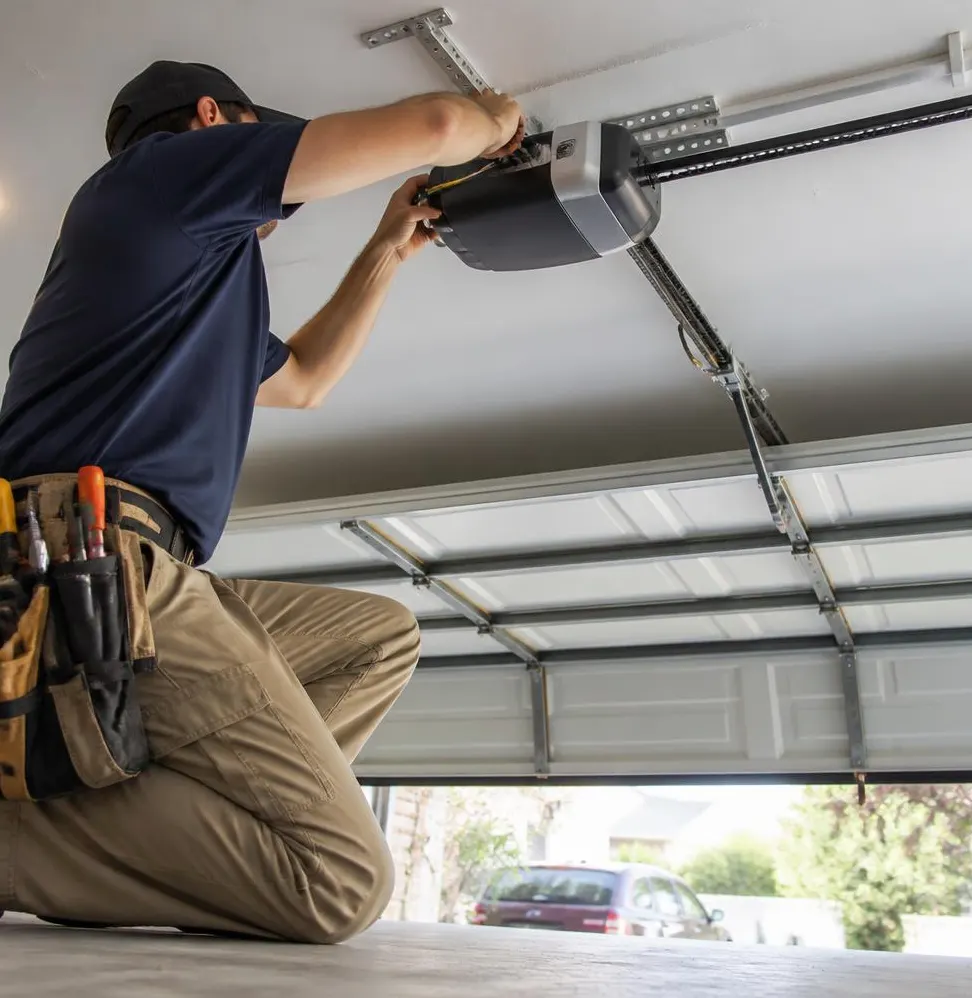
What It Costs to Wait Another Season
A garage door opener that only sometimes listens is easy to shrug off, especially when the door still works if you walk over and push the button hard enough. But heading into fall and winter in Eastvale, that habit gets expensive fast. Dry season dust is still settling on sensor lenses and circuit boards, Santa Ana wind events can kick up enough debris to interfere with weak signals, and once winter rain starts, a door that won't close reliably from the remote means someone is standing in the wet getting it shut by hand. Left alone, a flaky opener tends to fail completely at the worst moment—door stuck open overnight with the garage exposed to smoke and dust, or stuck closed when you need the car out. And if the root cause is actually a stressed circuit board, every month you keep forcing it through a power cycle increases the odds you're paying for a full opener replacement instead of a simple repair.
The Symptoms Worth Paying Attention To
Not every non-responsive opener behaves the same way, and the pattern actually tells a technician a lot before they even open the housing:
- The door responds to the wall button but ignores every remote in the house
- Only one remote works; the others used to work and now don't
- The door opens fine but won't close, or closes but won't open
- You have to stand right under the motor unit and point the remote straight up to get a response
- The door lights blink a set number of times instead of operating—this is the opener trying to tell you something
- Everything worked yesterday and today there's nothing at all, no lights, no motor hum
Working Through the Causes, in the Order a Technician Checks Them
1. Remote Batteries and Programming
This is the first thing checked because it's the most common and the cheapest to fix. A dying battery can cause intermittent response before it fails completely, which explains a door that works if you press the button five times. If a fresh battery doesn't help, the remote may have lost its programming to the motor unit, which happens occasionally after a power outage. Reprogramming takes a few minutes using the learn button on the motor housing and the remote's own pairing button.
2. The Wall Button and Its Wiring
If the wall button is also unresponsive, or if it's the only thing that still works, the next check is the low-voltage wiring running to it. Staples pinching the wire, a loose terminal screw at the motor unit, or a cracked wall button housing from age can all break the connection. This is a quick fix—strip and reseat the wire ends, or replace the button itself, which is an inexpensive part.
3. Dirty or Misaligned Safety Sensors
Modern openers won't close the door at all if the photo-eye sensors near the floor on each track aren't aligned and seeing each other clearly. Dust from dry months, cobwebs, or a sensor that's been bumped out of position will stop the door from closing even though the remote signal is reaching the motor just fine. The fix is wiping the lenses clean and loosening the mounting bracket just enough to realign the sensors until the indicator lights on both units go solid.
4. The Antenna on the Motor Unit
That short wire hanging down from the motor housing is the actual receiver antenna, and it's often knocked loose, bent up out of the way, or tucked behind the unit during a light bulb change. A technician checks that it's hanging freely and pointed down, since a damaged or disconnected antenna shortens the range dramatically—explaining why the remote only works a few feet from the door.
5. Signal Interference
Newer openers use rolling codes that are fairly resistant to interference, but LED bulbs in the motor unit's own light sockets, nearby solar inverter equipment, or other wireless devices in the garage can still cause intermittent dropped signals. Swapping a non-dimmable incandescent bulb back in, or temporarily unplugging suspected interference sources, helps narrow this down.
6. The Logic Board
If batteries, wiring, sensors, and antenna all check out, the circuit board inside the motor housing is next. Heat cycling through hot inland summers followed by humidity swings in winter rain can shorten the life of these boards, and a power surge from an outage can damage them outright. Symptoms include an opener that responds to nothing, or one with lights that blink error codes. Repair usually means replacing the board rather than fixing it, since boards aren't typically serviceable piece by piece.
7. A Failing Motor or Receiver
Last on the list because it's the least common cause but the most involved to fix: the receiver unit inside the motor itself has failed. At this point the practical choice is often between replacing the opener outright and continuing to chase intermittent failures in a unit that's already given a decade or more of service.
When to Call Eastvale Overhead Door Co
If you've swapped batteries, reprogrammed the remote, and wiped down the sensors and the door still won't listen, it's time for a diagnostic visit rather than more guessing. Eastvale Overhead Door Co's garage door opener installation and garage door repair technicians carry replacement logic boards, sensors, and antennas on the truck, so most of these issues get resolved in a single visit without waiting on a special order part.
If your opener is responding this poorly going into the rainy season, don't wait for it to fail completely on a wet night. Call Eastvale Overhead Door Co today to get your garage door opener diagnosed and working reliably before winter sets in.