
What One More Season of Waiting Actually Costs
Here's the argument in a nutshell: one of you thinks the squeaky, slightly off-balance garage door can wait until spring. The other has noticed a cable starting to fray near the bottom bracket and isn't sleeping well about it. The second person is right to worry. A garage door is a 150 to 400 pound object held up by two thin steel cables and a set of springs under heavy tension. When a cable snaps, that weight doesn't lower gently — it drops, often unevenly, which can crack panels, dent a parked car, snap the opener's drive gear, or injure anyone standing nearby. Worn rollers rarely cause a dramatic failure on their own, but they grind against the track every time the door moves, which speeds up track wear and makes the whole system work harder than it should. Ignoring both for another season usually turns a $75 to $150 roller job into a $300-plus repair that includes a cable, a service call, and sometimes a damaged panel.
What a Frayed Cable Actually Looks Like
The lift cables run from the bottom corner brackets up to the drum near the torsion spring. They're under constant tension, and over years of opening and closing, individual strands start to separate and stick out — sometimes called "birdcaging." You might spot this as a small cluster of wiry fuzz near the bottom bracket or the drum. Other warning signs include a cable that looks rusted or discolored, a door that suddenly hangs crooked when it opens, or a faint popping or snapping sound during operation. None of these are cosmetic. A fraying cable is a cable that's actively losing strands, and it's only a matter of time before the remaining ones give out under load.
What Worn Rollers Sound Like
Rollers are the small wheels that guide the door along the track. Steel rollers with bearings last the longest but get loud as the bearings dry out. Nylon rollers run quieter but develop flat spots or cracks as they age, especially after years of temperature swings. The telltale signs are a grinding or rumbling noise that gets worse over months, visible wobble as the door moves, or chunks of black or gray material (sometimes mistaken for mouse droppings) collecting on the track. If you run a hand along the roller and feel flat spots instead of a smooth round surface, that roller is done.
Why These Two Problems Often Show Up Together
Worn rollers and fraying cables often age at the same pace because they're both reacting to the same thing: years of cycles under tension and friction. A door that binds slightly because of a worn roller puts extra strain on the cable and drum as the opener fights to pull it through. A cable that's starting to fray can cause the door to tilt a few degrees, which throws more weight onto one roller track than the other. They're not directly connected, but one problem accelerates the other, which is why a tune-up that only addresses the noisy part (the rollers) without checking the cables is an incomplete fix.
Why the Local Climate Doesn't Do You Any Favors
Inland Empire summers mean long stretches of heat and dry air, plus the dust that comes with it during fire season. That dust works its way into roller bearings and track grooves, turning what should be a smooth glide into a gritty grind that wears parts down faster. Nylon rollers can also get brittle with repeated heat cycles, which is part of why cracks and flat spots show up more in doors that have gone through several hot inland summers. Then winter rain arrives and adds moisture to any exposed rust on a cable or bracket, which speeds up corrosion on anything that was already starting to fray. A garage that sits through hot, dusty summers and wet winters is working its hardware harder than a climate-controlled one, so the maintenance window matters more here than people assume.
What You Can Safely Check Yourself
- Visual inspection only: With the door closed and the opener unplugged, look at the cables near the bottom brackets and the rollers along the track for fraying, rust, cracks, or flat spots.
- Listen during a normal open and close: Grinding, popping, or a door that visibly jerks or tilts are signs something needs attention soon, not eventually.
- Check the track for debris: Dust buildup or roller fragments on the track are a sign the rollers are breaking down.
What you should not do is touch the cables, springs, or drums directly, or try to replace a roller near the bottom of the track where the cable runs close by. These components are under enough tension to cause serious injury if handled without the right tools and experience. This is the line between a reasonable DIY check and a job that calls for a technician.
When to Call Eastvale Overhead Door Co
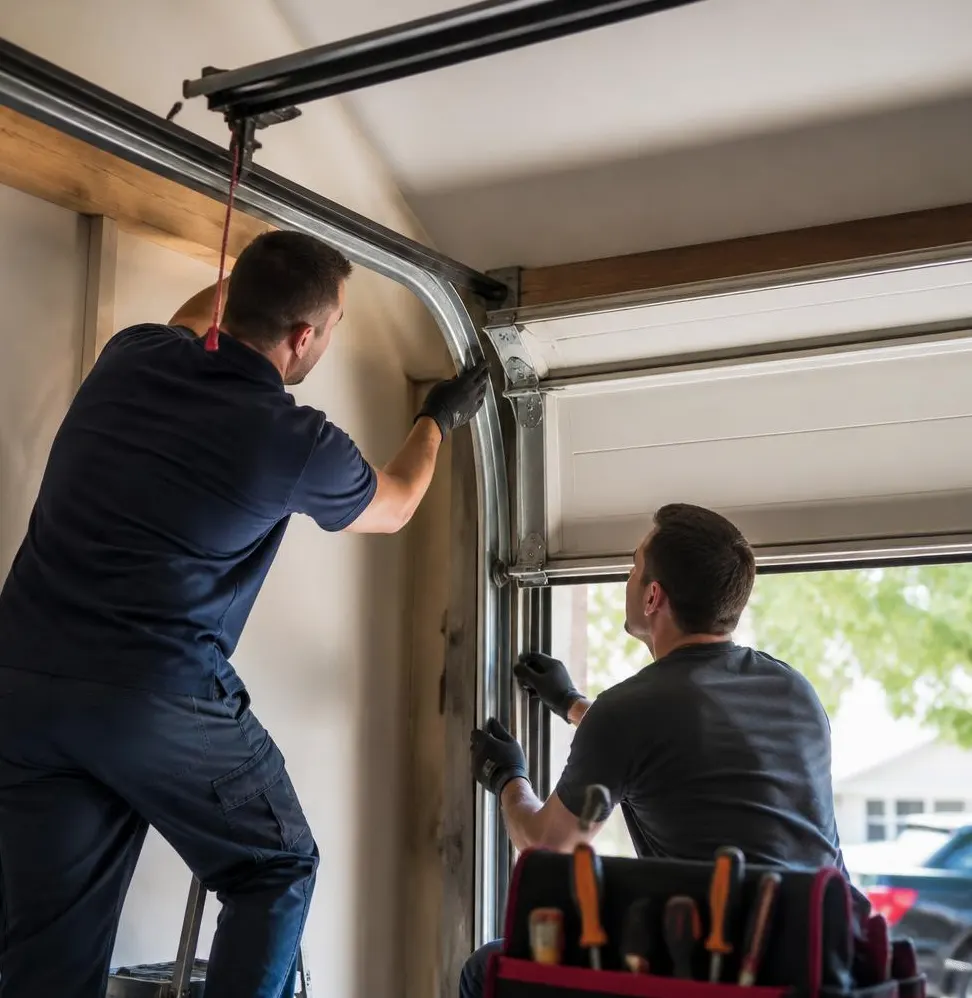
If you've spotted fraying strands, a tilting door, or rollers with visible flat spots, it's time to call rather than wait for the next noise to get worse. Eastvale Overhead Door Co handles both spring replacement and full garage door maintenance visits, which means a technician can replace a frayed cable, swap out worn rollers, and rebalance the door in one appointment instead of treating each symptom separately. We serve Eastvale, Corona, Jurupa Valley, Ontario, Norco, Chino, Chino Hills, and Mira Loma, and we show up on time to actually fix the problem, not just quiet it down for a few months.
If your garage door has been part of a household debate lately, let us settle it. Call Eastvale Overhead Door Co for a straightforward inspection and get it handled before the cable or roller decides the timeline for you.